
Statement to International and Regional Organizations Regarding Recent Security Escalation in the Kurdistan Region
As is widely known, during the past several days, the city of Erbil — the capital of the Kurdistan Region — along with other areas within the Region, has been subjected to multiple drone attacks and related security incidents linked to ongoing regional escalation. These developments have caused fear and anxiety among innocent civilians and have negatively affected public safety, stability, and confidence.
Beyond their immediate security impact, such incidents expose civilian infrastructure — including telecommunications networks, digital systems, and communication services — to serious risk. In modern conflict environments, connectivity is not merely a technical service; it is a fundamental pillar of public safety, emergency coordination, humanitarian communication, and economic continuity.
These attacks and cross-border security violations raise serious concerns regarding sovereignty, international law, and the protection of civilian territories from regional military confrontations. They also pose a broader threat to regional stability and peaceful coexistence.
Accordingly, we at the Kurdistan Gayandin Organization (KGO) call upon international and regional organizations to:
Condemn attacks that endanger civilian areas and infrastructure
Support the protection of civilian technological and communication systems
Express solidarity with the Kurdistan Region in safeguarding stability and public security
Encourage restraint and de-escalation to prevent further spillover into civilian territories
Local, regional, and international organizations play a vital role in strengthening cooperation among nations, addressing global challenges, preserving peace and security, and protecting civilian life and infrastructure. In times of heightened tension, responsible engagement and clear positions in support of civilian protection become even more essential.
The Kurdistan Region must not become an arena for broader geopolitical confrontation. Civilian populations and infrastructure must remain protected.
Connectivity is a lifeline for society and must be safeguarded accordingly.
KCO and HCWD Sign MoU to Empower Girls in ICT
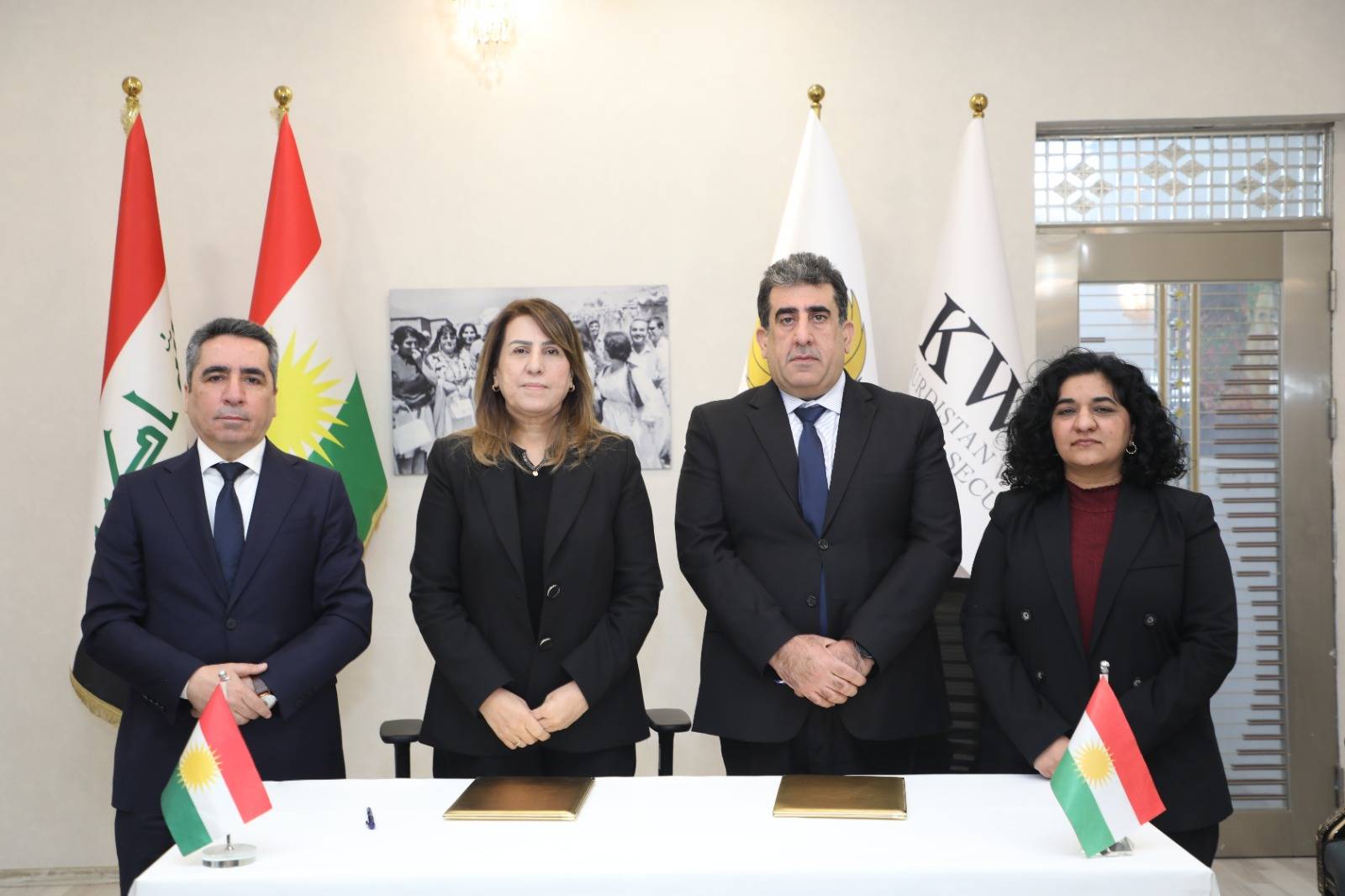
The Kurdistan Gayandin Organization (KGO) and the High Council of Women Development (HCWD) have signed a Memorandum of Understanding (MoU) to strengthen the participation of girls and young women in the ICT sector.
The MoU focuses on joint initiatives such as training programs, awareness campaigns, mentorship, and collaborative events under the Girls in ICT framework. The partnership aims to promote digital inclusion and help close the gender gap in technology across the Kurdistan Region.
This agreement marks a shared commitment to empowering girls as future digital leaders and supporting a more inclusive ICT ecosystem.
KCWA Condemns CMC’s Decision Against Korek as Politically Motivated
The Kurdistan Communication Workers Association (KCWA) strongly condemns the Iraqi Communications and Media Commission’s (CMC) recent actions against Korek Telecom, stating that the decision is politically driven rather than based on financial or regulatory grounds. KCWA asserts that such politically motivated interference threatens the stability of the telecommunications sector and undermines investor confidence in Iraq. The association calls on the CMC to act transparently and impartially, ensuring that regulatory decisions are made based on legal and economic justifications rather than political agendas. KCWA stands in solidarity with telecom workers and urges all stakeholders to protect the industry from unjust interventions that could disrupt essential services and harm the livelihoods of thousands of employees.
ERBIL, Kurdistan Region - Sirwan Barzani, the CEO of the Erbil-based Korek Telecom, on Tuesday criticized a decision by Iraq’s Communications and Media Commission (CMC) to cut off internet services for the company as “political” and unrelated to its financial rows.
The CMC’s decision “is political and not financial,” Sirwan Barzani told Rudaw.
Earlier on the same day, the Iraqi government agency had stated that it was suspending Korek’s internet services “due to non-compliance with paying outstanding debts and continued violations,” and “to encourage” the telecom company to “settle its debts.”
The CMC sent an official letter to the Iraqi communications ministry urging the implementation of the decision against Korek. It further urged the telecom company to compensate subscribers.
Barzani clarified that, if implemented, the CMC’s decision will not affect subscribers in the Kurdistan Region. “We will not remain silent,” he stated.
Korek subscribers across Iraq and the Kurdistan Region have been unable to make or receive calls, or send and receive messages from both domestic and international carriers for over a year. The disruption stemmed from a November 2023 decision by the CMC’s to block Korek’s communications over its unpaid financial obligations.
A month earlier, the CMC had warned Korek that its operating license had expired and that it had failed to pay “large sums” of owed money, meaning the license would not be renewed.
Korek condemned the CMC’s actions as “illegal” at the time, expressing its willingness to resolve the issues in accordance with the law.
from: www.rudaw.net
Official statement
Statement to International and Regional Organizations Regarding Recent Security Escalation in the Kurdistan Region
As is widely known, during the past several days, the city of Erbil — the capital of the Kurdistan Region — along with other areas within the Region, has been subjected to multiple drone attacks and related security incidents linked to ongoing regional escalation. These developments have caused fear and anxiety among innocent civilians and have negatively affected public safety, stability, and confidence.
Beyond their immediate security impact, such incidents expose civilian infrastructure — including telecommunications networks, digital systems, and communication services — to serious risk. In modern conflict environments, connectivity is not merely a technical service; it is a fundamental pillar of public safety, emergency coordination, humanitarian communication, and economic continuity.
These attacks and cross-border security violations raise serious concerns regarding sovereignty, international law, and the protection of civilian territories from regional military confrontations. They also pose a broader threat to regional stability and peaceful coexistence.
Accordingly, we at the Kurdistan Gayandin Organization (KGO) call upon international and regional organizations to:
Condemn attacks that endanger civilian areas and infrastructure
Support the protection of civilian technological and communication systems
Express solidarity with the Kurdistan Region in safeguarding stability and public security
Encourage restraint and de-escalation to prevent further spillover into civilian territories
Local, regional, and international organizations play a vital role in strengthening cooperation among nations, addressing global challenges, preserving peace and security, and protecting civilian life and infrastructure. In times of heightened tension, responsible engagement and clear positions in support of civilian protection become even more essential.
The Kurdistan Region must not become an arena for broader geopolitical confrontation. Civilian populations and infrastructure must remain protected.
Connectivity is a lifeline for society and must be safeguarded accordingly.
KGO and HCWD Sign MoU to Empower Girls in ICT
KCO and HCWD Sign MoU to Empower Girls in ICT
The Kurdistan Gayandin Organization (KGO) and the High Council of Women Development (HCWD) have signed a Memorandum of Understanding (MoU) to strengthen the participation of girls and young women in the ICT sector.
The MoU focuses on joint initiatives such as training programs, awareness campaigns, mentorship, and collaborative events under the Girls in ICT framework. The partnership aims to promote digital inclusion and help close the gender gap in technology across the Kurdistan Region.
This agreement marks a shared commitment to empowering girls as future digital leaders and supporting a more inclusive ICT ecosystem.
KCWA Statement
KCWA Condemns CMC’s Decision Against Korek as Politically Motivated
The Kurdistan Communication Workers Association (KCWA) strongly condemns the Iraqi Communications and Media Commission’s (CMC) recent actions against Korek Telecom, stating that the decision is politically driven rather than based on financial or regulatory grounds. KCWA asserts that such politically motivated interference threatens the stability of the telecommunications sector and undermines investor confidence in Iraq. The association calls on the CMC to act transparently and impartially, ensuring that regulatory decisions are made based on legal and economic justifications rather than political agendas. KCWA stands in solidarity with telecom workers and urges all stakeholders to protect the industry from unjust interventions that could disrupt essential services and harm the livelihoods of thousands of employees.
Breaking NEWS
ERBIL, Kurdistan Region - Sirwan Barzani, the CEO of the Erbil-based Korek Telecom, on Tuesday criticized a decision by Iraq’s Communications and Media Commission (CMC) to cut off internet services for the company as “political” and unrelated to its financial rows.
The CMC’s decision “is political and not financial,” Sirwan Barzani told Rudaw.
Earlier on the same day, the Iraqi government agency had stated that it was suspending Korek’s internet services “due to non-compliance with paying outstanding debts and continued violations,” and “to encourage” the telecom company to “settle its debts.”
The CMC sent an official letter to the Iraqi communications ministry urging the implementation of the decision against Korek. It further urged the telecom company to compensate subscribers.
Barzani clarified that, if implemented, the CMC’s decision will not affect subscribers in the Kurdistan Region. “We will not remain silent,” he stated.
Korek subscribers across Iraq and the Kurdistan Region have been unable to make or receive calls, or send and receive messages from both domestic and international carriers for over a year. The disruption stemmed from a November 2023 decision by the CMC’s to block Korek’s communications over its unpaid financial obligations.
A month earlier, the CMC had warned Korek that its operating license had expired and that it had failed to pay “large sums” of owed money, meaning the license would not be renewed.
Korek condemned the CMC’s actions as “illegal” at the time, expressing its willingness to resolve the issues in accordance with the law.
from: www.rudaw.net